
|
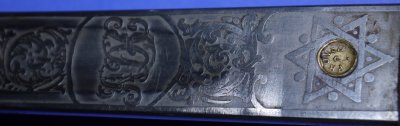
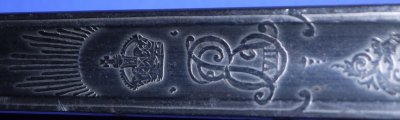
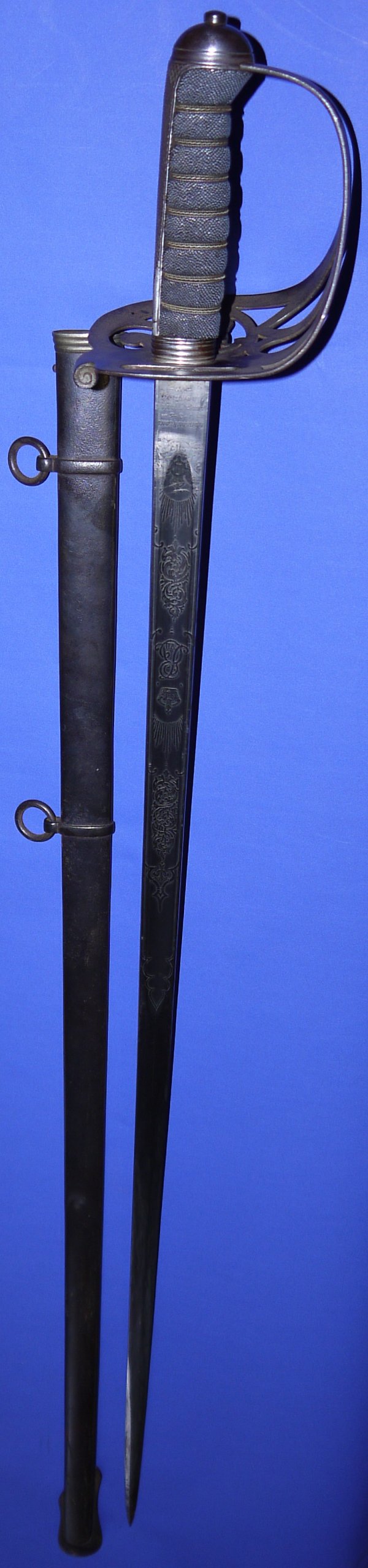
In overall good condition (blade especially good), an Edwardian / WW1 Edwardian Queens Royal West Surrey Regiment Officers Sword.
The sword etched to Hobson & Sons 1-3-5 Lexington St, London W with owner's initials R.D.C. for 1st Volunteer Battalion of The Queens, who served (with this sword) throughout World War One and made Captain on the 11th September 1914.
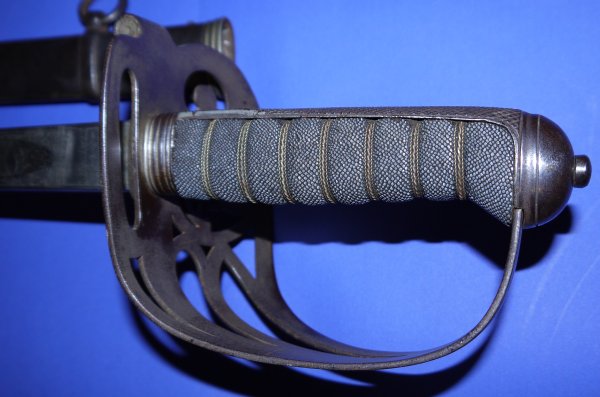
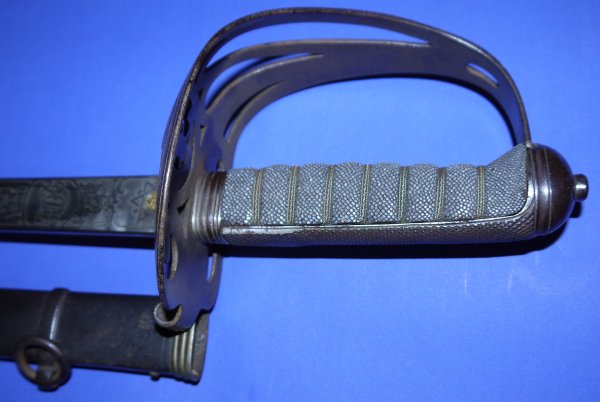
The 32 3/8 inch blade is extremely well etched and in excellent condition. Blade firm in the hilt. The hilt / guard with tarnish and oxidation (could easily be cleaned up). The fishskin grip in very good condition, as are the twisted grip wire bindings. The blackened (denoting rifles) steel scabbard has age, a small ding and some very light pitting but is overall good. The sword sheathes and draws very well. A really good sword with provenance. Well worth £? (too late, now sold). Please quote item reference T67 (0817). Further / full sized images available upon request. R. D. Cheesewright went on to be a Lieutenant Colonel; he died
on the 18th September 1948. During WW1 he had to write painful letters
to the families of his fallen subordinates, and graphic reports
of actions in which he was involved. Here is one such of his reports;
|





| Copyright © Antique Swords .Com (formerly SwordSales EU / Antique-Swords EU) - All rights reserved |